
Trauma Counselling in Singapore — Healing What Talking Alone Cannot Reach
Trauma is not just what happened to you. It is what happened inside you as a result — the way your nervous system learned to stay alert, the way certain triggers can pull you back into moments that are long past, the way you carry something that the people around you cannot see.
You may not even be sure whether what you experienced “counts” as trauma. Trauma is not defined by the severity of the event. It is defined by the impact it has had on your nervous system, your relationships, and your sense of self. If something has left a lasting mark that continues to affect how you function, feel, and relate to others, that matters, regardless of whether it fits a particular definition.
At Sacred Space Counselling, trauma-informed care is at the centre of how we work. We offer specialist trauma counselling in Singapore drawing on MEMI, Brain Switch 2.0, and other evidence-based approaches for clients ready to heal at a deeper level.
What Is Trauma?
Trauma occurs when an experience overwhelms our capacity to cope and process, leaving the nervous system stuck in a state of activation or shutdown. It can arise from:
- Single-incident trauma — accidents, assault, medical emergencies, sudden loss, natural disasters
- Complex or developmental trauma — prolonged exposure to abuse, neglect, emotional unavailability, or relational instability, particularly in childhood
- Relational trauma — betrayal by someone trusted, including a partner’s hidden sexual behaviour or infidelity
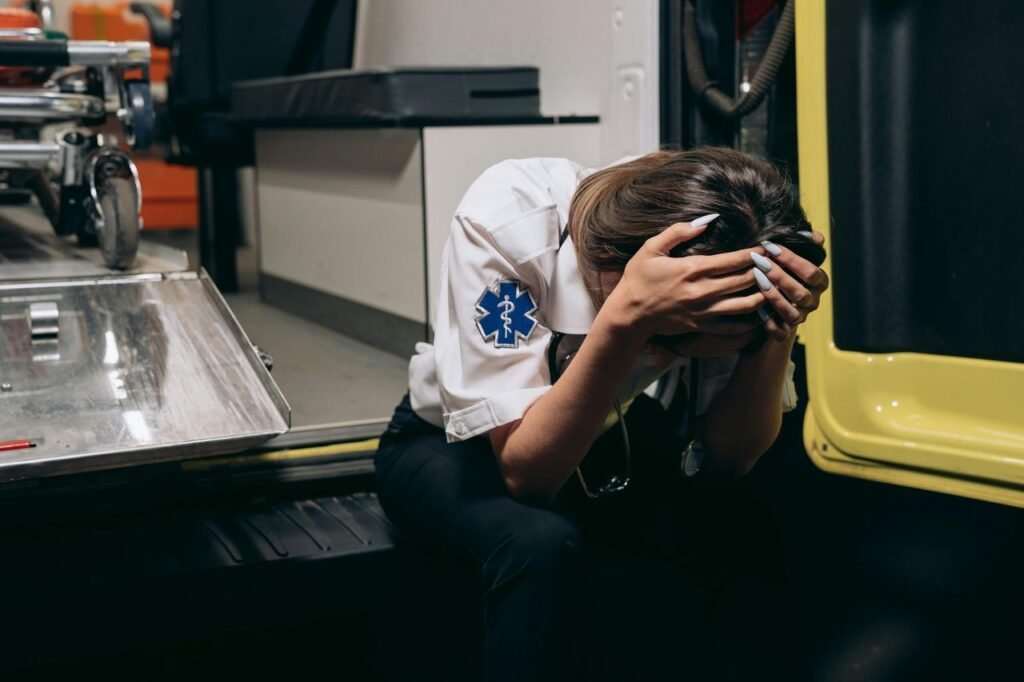
- Secondary trauma — trauma experienced through exposure to others’ suffering, common in caregiving, medical, and emergency service roles
- Moral injury — the wound of having acted, or failed to act, in ways that violated deeply held values
Trauma is also often cumulative. Multiple smaller experiences, none of which would qualify as “major trauma” individually, can accumulate into a significant traumatic load that affects functioning just as significantly.
How Trauma Lives in the Body and Brain
Trauma is not simply a collection of difficult memories. When the nervous system cannot fully process a threatening experience, it stores fragments of that experience, such as sensory impressions, emotional charges, and body sensations, in a form that remains “live.” This is why trauma survivors do not just remember; they can re-experience: through flashbacks, nightmares, emotional flooding, or a persistent sense of threat that does not match the present moment.
This understanding that trauma is stored in the body and the nervous system, not just in conscious memory, is why purely cognitive approaches often have limited impact on trauma. Talking about what happened is rarely enough. Healing requires working at the level where the trauma is actually stored.
Our Approach to Trauma Counselling
At Sacred Space, trauma counselling follows a phased, trauma-informed model. We never push into processing before you are ready. Stabilisation and safety always come first.
Phase 1: Safety and Stabilisation
Before any trauma processing begins, we stabilise your nervous system through grounding exercises such as WARA (Wiring Affect with ReAttach), an ultrafast affect-regulation intervention that targets negative affect at a neurological level that is particularly useful for emotional dysregulation and nervous system overactivation. We also build your internal resources through regulation tools, distress tolerance skills, and a therapeutic relationship characterised by safety and consistency. This phase is not preliminary; it is foundational. No trauma processing happens until you have a solid platform to work from.
Phase 2: Trauma Processing
Once stabilisation is established, we work with the traumatic material using approaches suited to your specific presentation:
- MEMI (Multichannel Eye Movement Integration) — a gentle, neurologically grounded approach that processes traumatic memories across their visual, auditory, and kinaesthetic dimensions simultaneously, without requiring detailed verbal narration.
- Brain Switch 2.0 — a content-free approach rooted in memory reconsolidation focusing on the visual, auditory, and kinesthetic elements that can produce rapid, lasting shifts in the emotional charge of distressing memories.
- Traditional Talk Therapy – we continue to use traditional talk therapy, such as CBT, SFBT, Transactional Analysis, alongside the neuroscience-based methods to resolve trauma wounds.
Phase 3: Integration and Reconnection
Trauma healing is not complete when the memories lose their charge. The final phase involves integrating the work into your life: rebuilding identity, re-engaging relationships, and discovering what it means to live forward rather than being defined by what happened.
Trauma and Compulsive Behaviour
Unresolved trauma is one of the most significant and frequently overlooked drivers of compulsive sexual behaviour, pornography use, substance use, and other addictive patterns. Many people who come to us for help with compulsive behaviour discover that the behaviour has been serving a function such as numbing, escaping, and self-soothing that is directly connected to unresolved traumatic pain.
Where this is the case, addressing the compulsive behaviour without addressing the underlying trauma is rarely sufficient for lasting change. Our integrative approach holds both dimensions simultaneously.
Trauma and Faith
For Christian clients, trauma can raise profound theological questions. Where was God? Why did this happen? Does my inability to “move on” reflect a lack of faith? The intersection of trauma and theology deserves careful, non-simplistic engagement; neither dismissing the theological questions nor allowing them to be used as barriers to healing.
Lament is a legitimate biblical posture. The books of Psalms, Job, and Lamentations model raw, unresolved grief and suffering held within a relationship with God. Healing from trauma, for a person of faith, does not require resolving all the theological questions first. It requires safety, accompaniment, and the gradual restoration of the capacity to be present to life.
For clients who value a faith-integrated approach, we hold the spiritual and clinical dimensions of trauma together: with care, theological honesty, and clinical rigour.
Frequently Asked Questions
Do I have to talk about what happened in detail?
Not necessarily. Several of the approaches we use, particularly MEMI and Brain Switch 2.0, are content-free or require only minimal verbal disclosure. Processing happens at a neurological level, not a narrative one. Many trauma survivors find this one of the most significant reliefs about working at Sacred Space.
What if I am not sure whether I have trauma?
That uncertainty is very common. Many people minimise their own experiences, particularly if others have had it “worse,” or if the trauma did not involve a single dramatic event. A thorough initial assessment will help us understand your history and its impact. At Sacred Space, we use a clinically-verified assessment to assess for signs of trauma.
How long does trauma counselling take?
The length of counselling differs from person to person and is dependent on the specific situation. Single-incident trauma typically takes a significantly shorter time to resolve than complex or developmental trauma. Neuroscience-based methods like MEMI and Brain Switch 2.0 have been proven effective in resolving trauma in a shorter time frame compared to the traditional talk therapy.
Can trauma counselling make things worse?
The answer is yes. Counsellors who are not trauma-informed or trauma-trained can make matters worse. This is why choosing the right therapist is vital. At Sacred Space, we have trauma-trained therapist who are experienced in handling complex and developmental traumas.
Take the First Step
Trauma can make reaching out feel unsafe, as though opening the door to it will be overwhelming. It is worth knowing that good trauma counselling does not flood you with what you are not ready for. It meets you where you are, and moves at your pace.
We offer a free 30-minute consultation — a safe, no-pressure conversation to help you understand whether Sacred Space is the right place for your healing journey.