

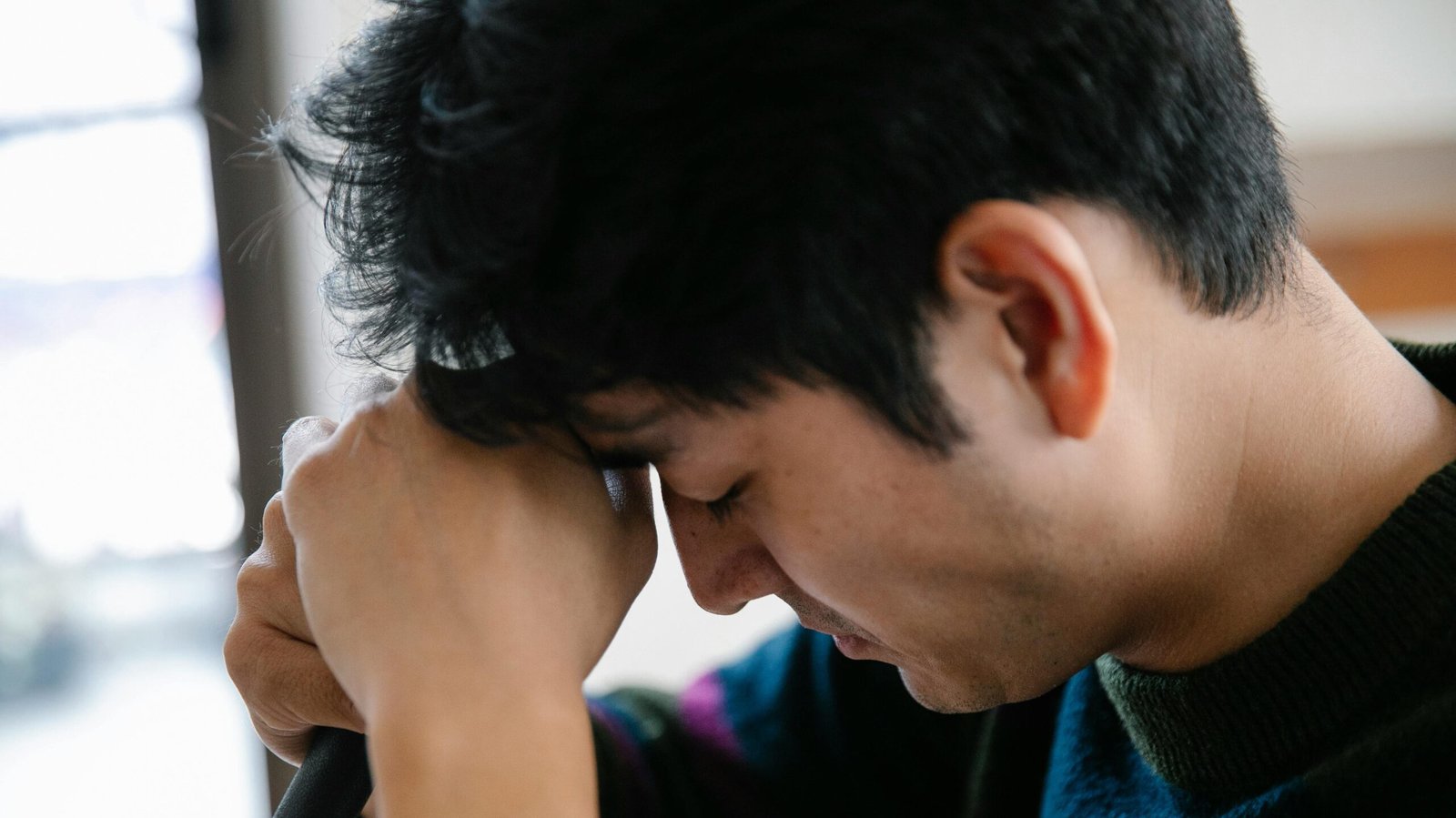
Trauma and Porn Addiction: Why It Happens and How to Heal
By Jeffrey Pang
SAC Clinical Member and Registered Counsellor, M.Coun, Dip. CSBD (ISAT)
A note before you read: this article is for education and is not a substitute for personal counselling. If something here stirs up difficult feelings, please be gentle with yourself and consider speaking with a qualified professional.
If you keep returning to pornography even though you hate how it makes you feel, you are probably asking yourself one question: “What is wrong with me?”
Here is a different question worth asking: “What happened to me?”
In my work as a counsellor, I see the same pattern again and again. Behind the habit, there is often a hurt. Sometimes it is a painful childhood. Sometimes it is years of loneliness, rejection or shame. Research increasingly supports this link between trauma and compulsive porn use [1][2][3]. Understanding it can take away a great deal of self-blame, and that is where healing often begins.
First, what do we mean by “trauma”?
Many people think trauma only means something dramatic, like an accident, a war or an assault. Those are traumatic. But trauma is wider than that.
Trauma is any experience that overwhelmed you at the time and left a lasting mark on your mind and body. That can include:
- Abuse or violence
- Neglect, or growing up without feeling safe or loved
- Constant criticism, humiliation or rejection
- Being exposed to sexual material as a child, before you could make sense of it
- Betrayal by someone you trusted
Two people can live through the same event and be affected very differently. Trauma is not only about what happened. It is about what it did inside you.
How common is the link between trauma and porn?
The research paints a clear picture:
- A 2024 University of Georgia study of 149 men found that about 1 in 4 (25.5%) screened positive for sex addiction, and childhood trauma was a significant predictor [1].
- People living with PTSD are 2 to 4 times more likely to develop an addiction of some kind [4].
- Trauma is not only a male issue. A 2025 review of 62 studies found that trauma history is a leading risk factor for compulsive sexual behaviour in women too [5].
Why does trauma lead to porn?
1. Porn can become a way to cope with pain
Trauma leaves the body on edge. You may feel anxious, restless, empty or numb. Porn offers fast relief. It floods the brain with feel-good chemicals and, for a few minutes, the pain goes quiet. Researchers have described pornography use as a possible way of coping with stress and low mood [2]. The relief does not last, though, and the pain is still there afterwards.
2. The shame cycle keeps it going
After using porn, many people feel guilt and disgust. That shame is painful, and what do we reach for when we are in pain? The same thing as before. Use, then shame, then use again. Shame does not break this cycle. It feeds it.
3. Porn feels like closeness without the risk
If you learned early in life that people hurt you, let you down or leave, real intimacy can feel dangerous. Porn gives you a sense of connection with no risk of rejection. Studies link compulsive porn use with avoidant styles of relating to others [6]. It feels like closeness, but it is a substitute.
4. Early exposure can itself be wounding
For many people, porn started in childhood or the early teens. A young brain does not know how to process that material. Researchers suggest early exposure can shape how a person’s sexual arousal develops, and can act as a form of trauma in its own right [7].
What is happening in your brain?
This part matters, because it explains why “just try harder” so rarely works.
The alarm system gets stuck on. Trauma keeps the brain’s alarm centre (the amygdala) on high alert. At the same time, the “thinking” part of the brain that helps you pause and make wise choices (the prefrontal cortex) works less well under stress. So you may know exactly what you want to do, and still feel unable to do it.
The reward system gets rewired. Porn triggers a surge of dopamine, the brain’s reward chemical. With repeated use, the brain adapts. You may need more to feel the same effect, and cues like boredom, loneliness or stress can set off strong urges that feel automatic [8][9].
Put together, this means compulsive porn use is not simply a lack of discipline. It is a brain that has learned to survive in a particular way. A brain that learned this can also learn something new.
Porn use can also create trauma
The hurt goes both ways. Partners who discover a loved one’s porn use often describe symptoms similar to trauma, such as shock, intrusive thoughts, feeling on edge, and a deep loss of trust [10]. If this is your story, your pain is real too, and you deserve support of your own.
So what actually helps?
Filters, accountability apps and willpower can be useful tools. But on their own they deal with the behaviour and leave the root untouched. Lasting change usually needs both: healing the wound underneath, and building new ways to handle urges and emotions.
Healing the root with MEMI
MEMI (Multichannel Eye Movement Integration) is an approach to processing trauma using guided eye movements. The aim is to help the brain reprocess painful memories so that they lose their emotional charge and feel like the past rather than the present.
Many people appreciate that MEMI does not require you to retell every detail of what happened. If talking about your story feels overwhelming or shaming, this can feel much safer. It is a newer approach, and larger controlled studies are still needed, but it is built on well-established knowledge about how eye movements affect the brain’s handling of fear and memory [11].
Calming the urge in the moment with Brain Switch 2.0
Brain Switch 2.0 is a practical, brain-based method for interrupting an urge and helping your body shift out of a stressed state. Think of it as learning to flip the switch before the old pattern takes over. It gives you something concrete to do in the moments when willpower alone does not hold.
Rebuilding connection and self-worth
Recovery also means learning to deal with shame, to trust safe people, and to feel at home in your own skin. Counselling can offer that safe relationship. So can supportive friends, family and community.
Where faith fits in
For many of my clients, faith is central to healing. The message that you are loved, forgiven and not defined by your worst moments speaks directly to the shame that drives this cycle. Grace does not excuse the struggle. It gives you somewhere safe to stand while you heal from it. Faith is welcome in the counselling room if it matters to you, and never imposed if it does not.
Five things to remember
- Your struggle is not proof that you are weak or broken.
- Compulsive porn use is often connected to pain, not just pleasure.
- Shame makes the cycle worse. Compassion helps it heal.
- Willpower alone is rarely enough, and that is not your fault.
- Healing is possible, and you do not have to do it alone.
You are welcome here
If you have read this far, it took courage. Whether you are struggling yourself, or loving someone who is, please know that you will not be judged here. At Sacred Space Counselling, we offer a calm, confidential and shame-free space where your story is met with respect, and where healing can begin at a pace that feels safe for you.
When you are ready, reach out and book a conversation with us. No pressure, no judgement. Just a first step.
Book a FREE Confidential 30-minutes Phone Consultation here.
Is your past still shaping your present? Trauma and compulsive behaviour are often connected, and both can be treated. I offer trauma counselling in Singapore with a trauma-informed approach. Book a free 30-minute consultation.
References
Numbers in square brackets in the article refer to the sources below. Short quotes are taken from the cited sources.
- Giordano, A.L. et al. (2024). Study links childhood trauma, emotional abuse to sex addiction in men. University of Georgia College of Education, 23 April 2024. Dr Giordano notes: “Childhood trauma and attachment issues are risk factors for sex addiction.” Trauma and porn
- Bob, P. & Ptacek, R. (2023). Pornography Consumption and Cognitive-Affective Distress. Journal of Nervous and Mental Disease. PMC10399954. The authors write that pornography use “might represent a defence mechanism against excessive stress” and that “psychosocial stress and possibly traumatic experiences may play a significant role in Internet pornography addiction.” Trauma and porn
- Mestre-Bach, G. & Potenza, M.N. (2025). Expanding the Lens: A Systematic Review of the Latest Research on Compulsive Sexual Behavior and Problematic Pornography Use among Women. Current Addiction Reports. Risk factors include “trauma history, impulsivity, emotional dysregulation.” Trauma and porn
- CPTSD Foundation (2023). Addiction to Pornography. cptsdfoundation.org. Trauma and porn
- Mestre-Bach, G. & Potenza, M.N. (2025), as above. Review of 62 studies published 2020–2024. Trauma and porn
- Ben Brahim, L. et al. (2024). Compulsive Cyberporn Use. Addictive Behaviors Reports, 19, 100542. Trauma and porn
- Giroux, D.C. (2021). Early Exposure to Pornography: A Form of Sexual Trauma. Journal of Psychiatry Reform. See also Carnes, P. (2008) on the “sexual arousal template.” Trauma and porn
- Park, B.Y. et al. (2016). Neuroscience of Internet Pornography Addiction: A Review and Update. Behavioral Sciences, 5(3), 388–433. PMC4600144. Trauma and porn
- Hilton, D.L. & Watts, C. (2011). Pornography Addiction: A Neuroscience Perspective. Surgical Neurology International, 2(1), 19. PMC3050060. Also: Kühn, S. & Gallinat, J. (2014). Brain Structure and Functional Connectivity Associated with Pornography Consumption. JAMA Psychiatry, 71(7), 827–834. Trauma and porn
- Skinner, K.B. (2005). Trauma Inventory for Partners of Sex Addicts (TIPSA). Trauma and porn
- Deninger, M. (2021). Multichannel Eye Movement Integration: The Brain Science Path to Easy and Effective PTSD Treatment. Gracie Publishing. MEMI is an emerging approach and large-scale controlled trials are still pending. Trauma and porn

